Chandan Yatra: History, Significance, Rituals & Jagannath Tradition
Chandan Yatra, also known as Gandhalepana Yatra, is one of the important festivals associated with Mahaprabhu Jagannath and the rich spiritual traditions of Odisha. The festival is particularly famous in Puri and is also observed in other places where Jagannath traditions are followed.
The word Chandan refers to sandalwood, while Yatra means a sacred journey or procession. The festival is closely associated with sandalwood, water, devotional rituals and the summer season.
At Shri Jagannath Mandir, Thyagraj Nagar, New Delhi, Chandan Yatra provides devotees with an opportunity to experience an important part of the Jagannath tradition while staying connected to the cultural and spiritual heritage of Odisha.
According to the Government of Odisha, Chandan Yatra is generally observed during the month of Vaishakha and traditionally continues for 42 days, divided into two periods known as Bahara Chandan and Bhitar Chandan.
What is Chandan Yatra?
Chandan Yatra is a traditional Jagannath festival in which representative deities are taken out for special rituals associated with sandalwood and water.
In Puri, the first 21 days are known as Bahara Chandan, or Outer Chandan. During this period, representative deities are taken in procession towards Narendra Tirtha/Narendra Tank, where they participate in decorated boat rituals.
The following 21 days are known as Bhitar Chandan, or Inner Chandan, and the associated rituals are performed within the temple.
The festival is therefore not simply a religious celebration—it is an important part of the annual cycle of Mahaprabhu Jagannath’s traditions and rituals.
Why is Chandan Yatra celebrated?
Chandan Yatra takes place during the warmer period of the year and has a strong association with sandalwood and water.
Sandalwood, traditionally valued for its cooling and fragrant qualities, forms an important part of the festival. The rituals involving water and decorated boats are also closely connected with the seasonal character of the celebration.
The festival reflects an important aspect of Jagannath tradition: the deities are worshipped not only through formal rituals but also through celebrations that express devotion, joy and a personal relationship between devotees and Mahaprabhu.
When is Chandan Yatra celebrated?
Chandan Yatra generally begins on Akshaya Tritiya, during the month of Vaishakha.
The traditional festival extends for 42 days, with the first 21 days known as Bahara Chandan and the following 21 days known as Bhitar Chandan.
Because the festival follows the Hindu lunar calendar, the corresponding dates in the Gregorian calendar change every year.
For devotees planning to attend Chandan Yatra celebrations at a particular temple, it is therefore important to check the temple’s official annual festival schedule.
What is Bahara Chandan?
Bahara Chandan means Outer Chandan and traditionally covers the first 21 days of Chandan Yatra.
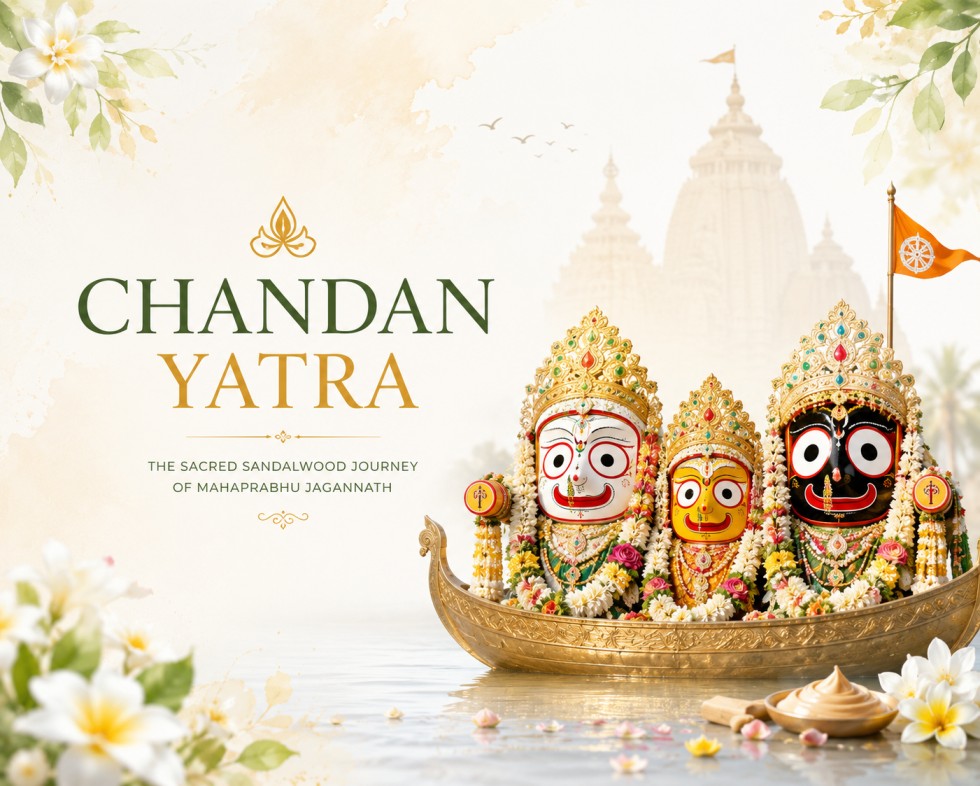
In Puri, representative images associated with Mahaprabhu Jagannath and other deities are taken in procession towards Narendra Tirtha. The deities are placed on beautifully decorated boats and participate in the traditional water rituals.
The Government of Odisha describes the festival as featuring decorated boats and the participation of representative deities along with the Pancha Pandavas, the five associated Shiva deities.
This boat ritual is one of the most visually distinctive elements of Chandan Yatra.
What is Bhitar Chandan?
The second half of the festival is known as Bhitar Chandan, meaning Inner Chandan.
During this period, the rituals are primarily conducted within the temple. According to Odisha’s official cultural information, this second 21-day period follows the initial Bahara Chandan period.
Together, Bahara Chandan and Bhitar Chandan make Chandan Yatra one of the longest festival observances connected with the Jagannath tradition.
Chandan Yatra and Narendra Tank
One of the most iconic traditions associated with Chandan Yatra in Puri is the boat procession at Narendra Tank.
Representative deities are taken to the sacred water body, where they participate in beautifully arranged boat rides.
Odisha Tourism describes the Chandan Yatra experience as involving representative deities such as Madan Mohan, along with representatives associated with Bhudevi, Sridevi, Krishna, Balaram and the Pancha Pandavas, who undertake boat rides at Narendra Water Tank.
The sight of decorated boats moving across the water, accompanied by devotional activities, is one of the most memorable expressions of Odisha’s Jagannath culture.
Spiritual Significance of Chandan Yatra
Chandan Yatra carries several layers of spiritual and cultural significance.
1. A celebration of Mahaprabhu Jagannath
The festival is an important part of the annual Jagannath tradition and reflects the living devotional culture surrounding Mahaprabhu.
2. Connection with nature and the seasons
The use of sandalwood and water during the warmer season gives the festival a strong seasonal character.
3. Devotion expressed through celebration
Chandan Yatra combines worship with music, procession, water rituals and community participation.
4. Preservation of Odisha’s heritage
The festival keeps traditional Jagannath rituals and cultural practices alive for future generations.
Odisha’s official tourism information identifies Chandan Yatra as one of the major festivals associated with Puri and notes that it is also observed in other parts of Odisha.
Chandan Yatra and Jagannath Culture
The importance of Chandan Yatra extends beyond one festival.
The Jagannath tradition is deeply connected with Odisha’s cultural identity. Festivals such as Chandan Yatra, Snana Yatra and Ratha Yatra form part of a larger annual cycle of religious and cultural observances.
The tradition also demonstrates how temple worship, music, art, rituals and community participation come together within Jagannath culture.
For devotees in Delhi, celebrations at Shri Jagannath Mandir, Thyagraj Nagar offer an opportunity to experience and participate in this cultural heritage closer to home.
Chandan Yatra at Shri Jagannath Mandir, Thyagraj Nagar, New Delhi
Shri Jagannath Mandir, Thyagraj Nagar, New Delhi, is an important centre for Jagannath devotees and Odisha’s cultural traditions in the capital.
The temple’s festival calendar brings together religious observances, devotional activities and cultural programs throughout the year.
During Chandan Yatra, devotees can connect with the spiritual traditions associated with Mahaprabhu Jagannath and experience the cultural atmosphere of the festival in Delhi.
For the exact date, timing, rituals and programme for the current year, devotees should refer to the temple’s official announcement, as festival dates follow the Hindu calendar and specific programmes can vary from year to year.
Why Devotees Celebrate Chandan Yatra
For devotees, Chandan Yatra is more than a festival on the calendar.
It represents:
- Devotion towards Mahaprabhu Jagannath
- The beauty of traditional Jagannath rituals
- The importance of water and sandalwood during the summer season
- Odisha’s rich spiritual heritage
- Community participation and celebration
- The continuation of centuries-old cultural traditions
The festival creates a unique atmosphere where spirituality, tradition and culture come together.
Frequently Asked Questions (FAQ)
Chandan Yatra is an important festival associated with Mahaprabhu Jagannath, traditionally celebrated with sandalwood-related rituals, processions and water activities.
The festival gets its name from Chandan, meaning sandalwood, which has an important role in the traditional observances.
The traditional Chandan Yatra associated with the Jagannath Temple at Puri lasts 42 days, divided into 21 days of Bahara Chandan and 21 days of Bhitar Chandan.
Bahara Chandan is the first 21-day period of Chandan Yatra. In Puri, representative deities are taken towards Narendra Tirtha for the traditional water and boat rituals.
Bhitar Chandan is the second 21-day period of Chandan Yatra, during which the associated rituals are primarily conducted within the temple.